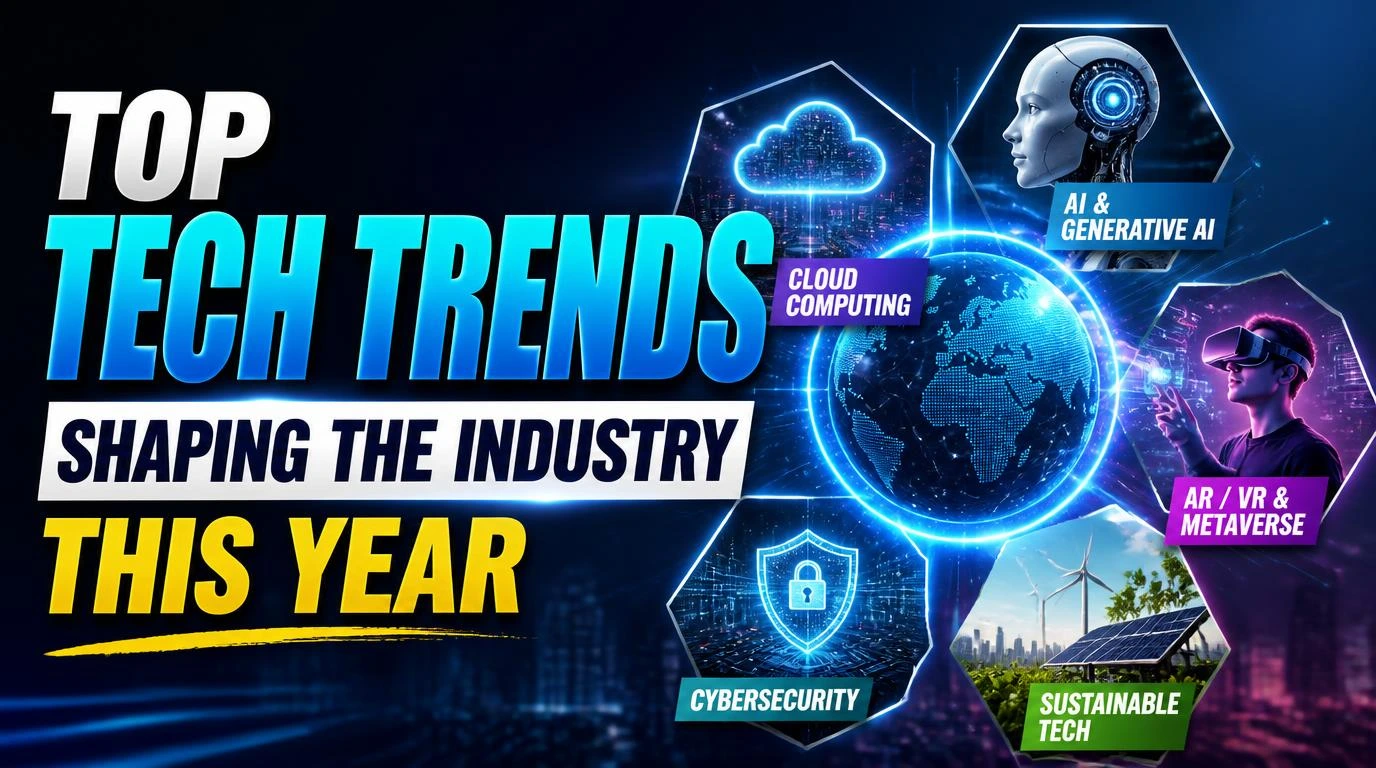
The top tech trends shaping the industry this year hit different when you’re actually building with them, not just reading headlines. I’ve spent the last several months testing tools, talking to developers, and watching entire workflows get rebuilt overnight. Some of this stuff felt like science fiction two years ago. Now it’s sitting in my browser tabs. The speed of change is wild, and honestly, a little intimidating. But mostly exciting.
1. Generative AI Moving Beyond the Hype
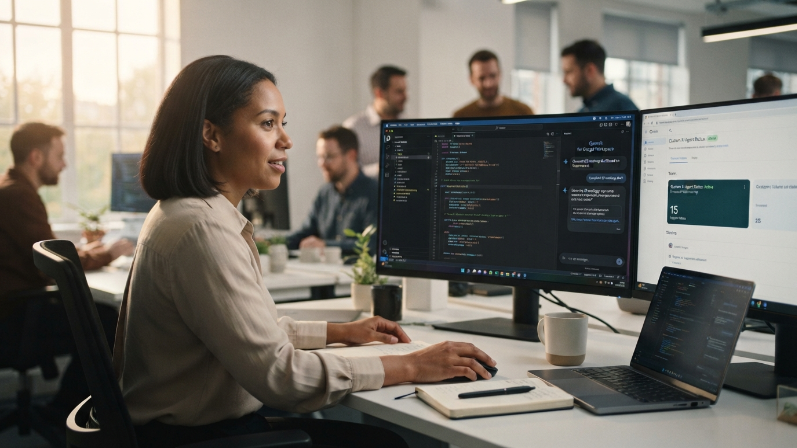
Generative AI stopped being a novelty act sometime around late 2024. Now it’s infrastructure. I use it daily for drafting, brainstorming, and even debugging code snippets. Tools like ChatGPT, Claude, and Google’s Gemini have matured fast, and companies are embedding them directly into existing products.
What changed this year is the shift from “look what AI can do” to “here’s how AI saves you three hours a week.” Businesses are deploying custom AI agents for customer support, internal documentation, and data analysis. If you’re not using some form of generative AI in your workflow by now, you’re genuinely falling behind.
2. The Rise of Small Language Models
Everyone obsessed over massive models last year. This year, the conversation shifted to small language models (SLMs) that run locally on your phone or laptop. Microsoft’s Phi-3, Google’s Gemma, and Meta’s Llama 3 have proven you don’t always need a billion-dollar data center to get smart results.
I ran Llama 3 on my MacBook Pro last month, and the experience was surprisingly smooth. These smaller models are faster, cheaper, and more private since your data never leaves your device. For startups and solo developers, SLMs are a massive deal. They lower the barrier to entry in a way that felt impossible just eighteen months ago.
3. Spatial Computing Gets Real
Apple Vision Pro launched, and while it hasn’t exactly replaced my laptop, it planted a flag. Spatial computing, where digital content blends with your physical space, is no longer a concept demo. Meta’s Quest 3 made mixed reality accessible at $500, and developers are finally building apps that justify the hardware.
I tried a collaborative design session in Vision Pro with a colleague across the country. We manipulated 3D models together in real time. It was clunky in spots, sure. But the potential was undeniable. Enterprise use cases like surgical training, architecture walkthroughs, and remote collaboration are driving serious investment here. This one’s a slow burn, but the trajectory is steep.
4. Cybersecurity Powered by AI
Cyberattacks got smarter this year, so the defenses had to keep up. AI-driven cybersecurity tools now detect threats in real time, flagging anomalies that human analysts would miss entirely. Platforms like CrowdStrike and Palo Alto Networks have leaned hard into AI-based threat detection, and the results speak for themselves.
I spoke with a security engineer at a mid-size fintech company who told me their AI system caught a phishing campaign within seconds of launch, something that previously would have taken hours. The flip side is that attackers are also using AI to craft more convincing scams and automate exploits. It’s an arms race, plain and simple. Investing in AI-powered security isn’t optional anymore.

5. Sustainable Tech and Green Computing
This one doesn’t grab headlines like AI does, but sustainable tech is quietly reshaping how companies think about infrastructure. Google committed to running its data centers on carbon-free energy 24/7 by 2030. Microsoft is investing in carbon capture. Even smaller companies are choosing cloud providers based on their sustainability reports.
I switched one of my personal projects to a green hosting provider earlier this year, and honestly, the performance was identical. The cost was marginally higher, but not enough to matter. Consumers are starting to care about this too. When you see “powered by renewable energy” on a product page, that label carries real weight now. It influences purchasing decisions, and companies know it.
6. Edge Computing Gains Momentum
Cloud computing isn’t going anywhere, but edge computing is stealing some of its thunder. Processing data closer to where it’s generated, on local devices, sensors, or nearby servers, reduces latency and bandwidth costs. For industries like manufacturing, autonomous vehicles, and IoT, this matters enormously.
I noticed the difference firsthand while testing a smart home setup. Commands processed locally through an edge device responded almost instantly, while cloud-routed requests had a noticeable delay. AWS, Azure, and Google Cloud all expanded their edge offerings this year. As 5G coverage improves, expect edge computing to become the default for anything that requires real-time responsiveness. The combination of edge and AI is particularly powerful.
7. The Quantum Computing Countdown
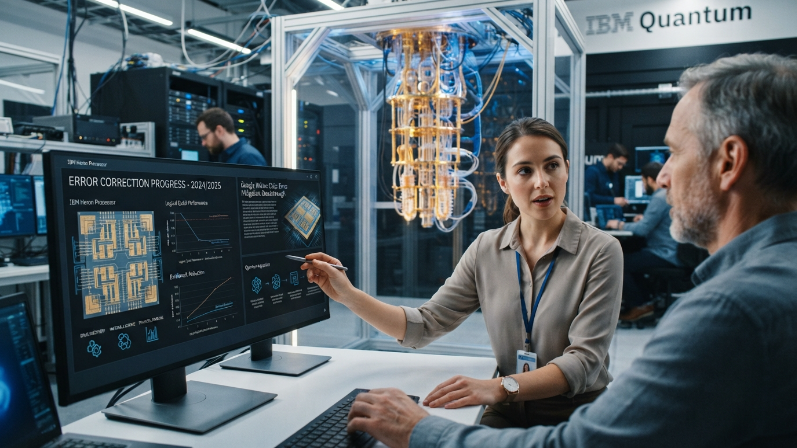
Nobody’s replacing their laptop with a quantum computer yet. But 2024 and 2025 brought genuine milestones. IBM’s Heron processor and Google’s Willow chip demonstrated real progress in error correction, which has been the biggest bottleneck for years. We’re moving from “quantum is theoretically interesting” to “quantum might actually solve specific problems soon.”
Drug discovery, materials science, and complex financial modeling are the areas most likely to benefit first. I attended a virtual quantum computing workshop earlier this year, and even the researchers admitted we’re still years away from broad commercial use. But the foundation is being laid right now. Companies investing in quantum readiness today will have a serious head start when the technology matures.
8. Platform Engineering Replaces DevOps Chaos
If you work in software, you’ve probably felt the pain of overly complex DevOps pipelines. Platform engineering emerged as a practical response. Instead of every team building their own deployment workflows, companies are creating internal developer platforms that standardize the process.
Tools like Backstage (originally built by Spotify), Humanitec, and Port are leading this movement. I helped set up a basic internal platform for a small team, and the reduction in onboarding time alone justified the effort. New developers went from spending days configuring their environment to being productive within hours. Gartner predicted that 80% of software engineering organizations will have platform teams by 2026. From what I’m seeing, that estimate might be conservative.
9. Digital Twins Expand Beyond Manufacturing
Digital twins, virtual replicas of physical objects or systems, have been used in manufacturing for years. But this year, they started showing up everywhere. City planners use them to simulate traffic flow. Healthcare providers model patient outcomes before surgery. Even retailers create digital twins of their stores to test layout changes virtually.
I watched a demo where an energy company used a digital twin of their entire power grid to predict maintenance needs weeks in advance. The accuracy was impressive. Siemens, NVIDIA (through their Omniverse platform), and GE are pushing this technology hard. The cost of creating digital twins has dropped significantly, making them accessible to mid-size businesses for the first time.
10. Top Tech Trends Shaping the Industry This Year: The Human Element
Here’s what ties all of these together. Every single one of the top tech trends shaping the industry this year ultimately comes back to people. AI tools need humans to direct them. Spatial computing needs designers who understand physical space. Cybersecurity needs analysts who ask the right questions.
The biggest mistake I see companies make is chasing trends without investing in the humans who implement them. Training, upskilling, and hiring for adaptability matter more than ever. Technology moves fast. People who learn fast move with it. IMO, the most valuable skill in tech right now isn’t coding or prompt engineering. It’s the ability to learn something new every few months without burning out.
Frequently Asked Questions
Which tech trend will have the biggest impact this year?
Generative AI continues to have the widest impact across industries. It touches everything from content creation to software development to customer service. While other trends like quantum computing and spatial computing carry enormous long-term potential, AI integration is already changing how millions of people work every single day, and that lead is only growing.
Are small language models better than large ones?
Not better, just different. Small language models excel when you need speed, privacy, and lower costs. They run locally, which means your data stays on your device. Large models still outperform them on complex reasoning and creative tasks. The right choice depends entirely on your specific use case and how much computing power you have available.
How do the top tech trends shaping the industry affect small businesses?
Small businesses benefit most from AI tools, sustainable tech, and platform engineering. These trends lower costs, improve efficiency, and reduce the technical expertise needed to compete. Cloud-based AI services like those from OpenAI and Google now offer affordable tiers designed specifically for smaller teams. You don’t need a massive budget to take advantage of what’s happening right now.
Is quantum computing ready for everyday use?
Not yet. Quantum computing is still in its research and early commercial phase. Current machines require extreme conditions to operate, and error rates remain high. Most experts estimate meaningful commercial applications are still three to seven years away. That said, businesses in pharmaceuticals, finance, and logistics should start learning about quantum readiness now to avoid playing catch-up later.
What skills should I learn to stay relevant in tech?
Focus on AI literacy, data analysis, and cloud fundamentals. You don’t need to become a machine learning engineer, but understanding how AI tools work and how to use them effectively is critical. Soft skills like adaptability, cross-functional communication, and continuous learning matter just as much. The people who thrive aren’t necessarily the smartest. They’re the most curious.
Is spatial computing worth investing in right now?
For most consumers, it’s still early. The hardware is expensive and the app ecosystem is thin. For enterprise use cases like training, design collaboration, and remote assistance, spatial computing already delivers clear ROI. If you’re a developer, learning spatial computing frameworks now puts you ahead of the curve. If you’re a casual user, waiting another year or two makes sense.
Conclusion
This year feels like a turning point, not because any single technology is revolutionary on its own, but because so many of them are maturing at the same time. The gap between “emerging trend” and “daily tool” keeps shrinking. What trend are you most excited about, or most nervous about, heading into next year?