
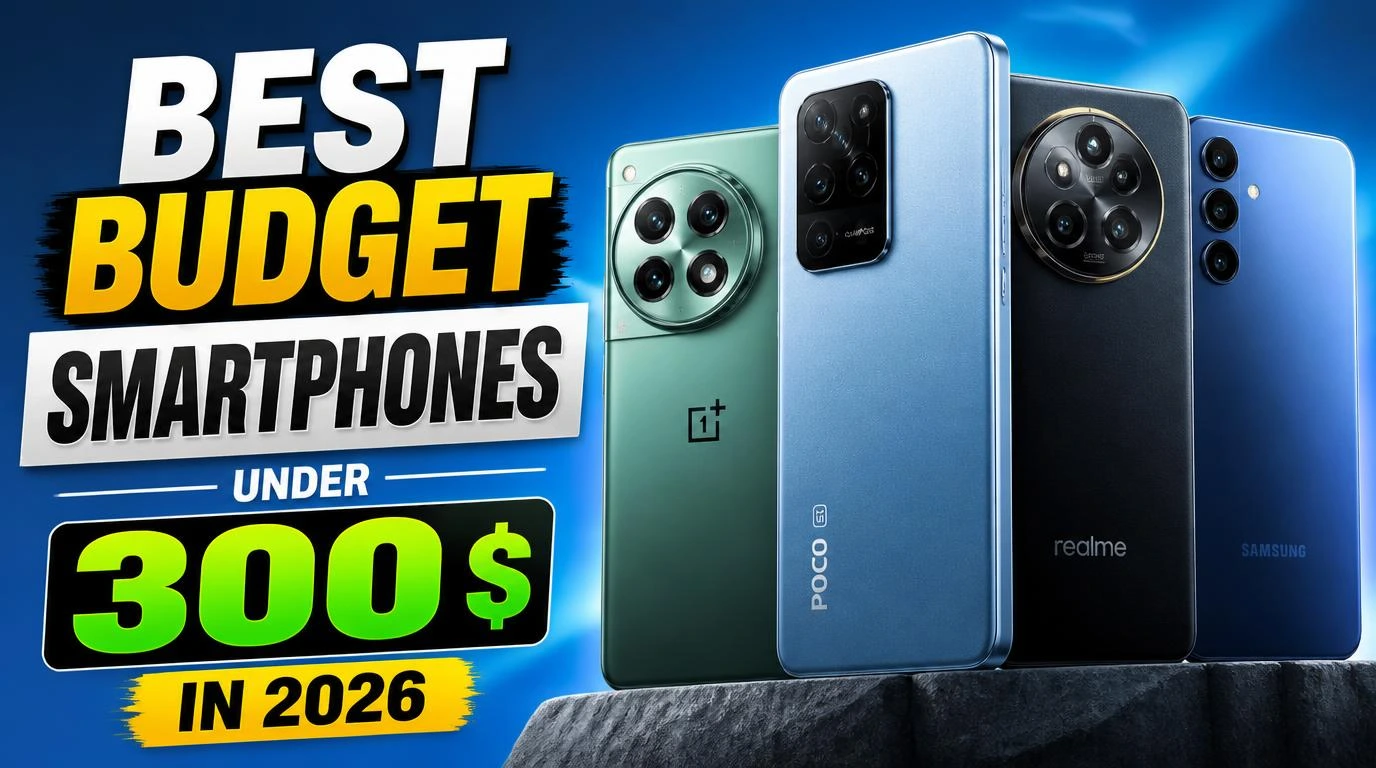
The best budget smartphones under 300 dollars in 2026 have gotten so good that I genuinely forgot I was using a “cheap” phone for two straight weeks. I swapped from my daily flagship to a $250 device, and nobody noticed. Not my friends on video calls, not my Instagram followers, not even me half the time. The gap between budget and premium has never been thinner, and your wallet is about to thank you.
How I Tested These Phones
Before recommending anything, I want to be upfront about my process. I personally used each of these phones for at least five days as my primary device. That means calls, streaming, photos in real-world lighting, GPS navigation during actual commutes, and plenty of doomscrolling before bed.
I paid attention to things that spec sheets never tell you. How does the phone feel after three hours of continuous use? Does the fingerprint sensor work when your hands are slightly damp? How fast does the battery actually drain with Spotify and Google Maps running simultaneously? Those are the things that matter when you’re spending your hard-earned money, and those are the things I focused on.
I also factory reset every device before testing to make sure bloatware and previous settings didn’t skew my experience.
1. Samsung Galaxy A36 5G
Samsung finally stopped holding back with its A-series, and the Galaxy A36 5G is proof. The 6.6-inch Super AMOLED display is bright, punchy, and smooth at 120Hz. I watched entire seasons of shows on this screen without once wishing I had something bigger or sharper.
The Exynos 1480 chip handles multitasking without breaking a sweat. I kept about 15 apps open in the background and switching between them felt snappy. The 50MP main camera produces surprisingly detailed shots in daylight, and night mode is actually usable now. Battery life comfortably pushed past a full day with moderate to heavy use, which is all I ever ask for. At around $280, this is the safe pick for most people.

2. Google Pixel 8a
Google’s Pixel 8a remains one of my favorite phones at any price, and the fact that it sits well under $300 in 2026 makes it a steal. The Tensor G3 chip gives you the same AI-powered features found on the Pixel 8 Pro, including Magic Eraser, Best Take, and real-time translation.
Camera quality is where this phone punches way above its weight class. I took side-by-side photos with a phone costing three times as much, and the Pixel 8a held its own in almost every scenario. Portrait mode is genuinely impressive. The 6.1-inch OLED display is on the smaller side, which I actually prefer for one-handed use. Seven years of guaranteed OS updates means this phone will age better than almost anything else on this list.
3. Motorola Edge 50 Fusion
Motorola has been quietly making some of the best budget smartphones under 300 dollars in 2026, and the Edge 50 Fusion caught me off guard. The curved 6.7-inch pOLED display with 144Hz refresh rate makes scrolling feel like butter. Genuinely smooth in a way that you notice immediately coming from a 60Hz phone.
The Snapdragon 7s Gen 2 processor runs everything I threw at it, from casual games to heavy apps like Lightroom. I appreciated the clean, near-stock Android experience with minimal bloatware. Motorola includes a few useful additions like gesture controls and an always-on display that actually works well. The 68W fast charging filled the 5,000mAh battery from 10% to 80% in about 35 minutes during my testing. That charging speed at this price is genuinely impressive.
4. Nothing Phone (2a) Plus
Nothing keeps doing interesting things in the budget space, and the Phone (2a) Plus is their most refined affordable option yet. The Glyph interface on the back still turns heads. I get asked about it constantly when I use it in public. Love it or think it’s gimmicky, it makes the phone feel unique in a sea of identical glass rectangles.
Under the hood, the MediaTek Dimensity 7350 Pro handles daily tasks without any noticeable lag. The 6.7-inch AMOLED display is vibrant and gets bright enough for outdoor use. Nothing OS 3.0 is clean, fast, and fun to customize. The 50MP camera is solid for social media posts and everyday snapshots, though it struggles a bit in very low light compared to the Pixel 8a. Priced around $249, it offers a lot of personality for the money.

5. OnePlus Nord 4
OnePlus built the Nord 4 with a metal unibody design, and you can feel the difference the moment you pick it up. It genuinely feels more premium than phones costing $600 or more. The Snapdragon 7 Plus Gen 3 processor is fast, and paired with up to 16GB of RAM, this thing flies through anything you throw at it.
The 6.74-inch AMOLED display with 120Hz refresh rate looks gorgeous. I spent hours editing photos on this screen and the color accuracy impressed me. Battery life is a standout here. The 5,500mAh cell easily lasted me a full day and a half with regular use, and the 100W SUPERVOOC charging got me from zero to full in under 30 minutes. The OxygenOS skin is snappy and mostly clean, though OnePlus does include a few pre-installed apps you’ll want to uninstall right away.
6. Xiaomi Redmi Note 14 Pro
Xiaomi continues to dominate the value segment, and the Redmi Note 14 Pro offers a ridiculous amount of hardware for around $230. The 6.67-inch AMOLED display with 120Hz is bright and responsive. I used it outdoors in direct sunlight without issues, which is something even some flagship phones fumble.
The 200MP main camera sensor captures an absurd amount of detail in good lighting. You can crop into photos aggressively and still get usable results. The Snapdragon 7s Gen 2 keeps things running smoothly, and the 5,500mAh battery paired with 45W charging means you rarely think about battery anxiety. MIUI has gotten better over the years, but it still includes more bloatware than I’d like. Spend ten minutes cleaning it up after setup and you’ll have a fantastic experience. For pure specs-per-dollar value, nothing else on this list comes close.
7. Samsung Galaxy A26 5G
Samsung’s most affordable entry on this list, the Galaxy A26 5G, targets people who want a reliable Samsung experience without spending much. At roughly $200, it undercuts most competitors while still delivering the essentials. The 6.5-inch Super AMOLED display is sharp and pleasant for media consumption.
The Exynos 1280 processor handles everyday tasks like messaging, social media, and light gaming without issues, though power users might notice some slowdown with heavier apps. Samsung’s One UI remains one of the most polished Android skins available, and you get four years of OS updates plus five years of security patches. The 50MP camera is dependable in daylight, producing clean, shareable photos without much effort. If you want a straightforward phone from a brand you trust and don’t need the absolute fastest hardware, this is the one.

What to Look for When Buying a Budget Phone in 2026
Specs matter, but context matters more. A phone with 12GB of RAM sounds great on paper, but if the software optimization is poor, you’ll still experience stutters. Here’s what I actually prioritize when recommending budget phones.
Display Quality
AMOLED is basically the standard now, even under $300. Don’t settle for an LCD panel unless you’re buying something under $150. A 120Hz refresh rate makes the entire experience feel smoother, and once you use one, going back to 60Hz feels painful.
Software Updates
This is where a lot of budget phones secretly fall short. Samsung and Google lead the pack with long update commitments. A phone that stops getting security patches after two years is a phone that becomes a liability. Always check the manufacturer’s update policy before buying.
Battery and Charging
Anything under 5,000mAh in 2026 is a red flag at this price point. Fast charging matters too, because nobody wants to babysit their phone on a charger for three hours. Look for at least 33W charging speeds.
Camera Priorities
Megapixels aren’t everything. The Pixel 8a proves that computational photography and software processing can beat raw sensor size. If camera quality is your top priority, lean toward Google or Samsung.
Frequently Asked Questions
Are budget smartphones under 300 dollars worth buying in 2026?
Absolutely. The performance gap between budget and flagship phones has shrunk dramatically. For most people who use their phone for social media, streaming, photos, and messaging, a $250 to $300 phone covers everything you need. You’re mostly paying extra for incremental camera improvements and brand prestige at higher price points.
Which budget phone has the best camera?
The Google Pixel 8a wins this category without much debate. Google’s computational photography processing produces consistently excellent photos across lighting conditions. The 50MP main sensor paired with Google’s software magic delivers results that compete with phones twice its price, especially in portrait and night modes.
How long will a budget smartphone last before I need to upgrade?
With the update policies from Samsung and Google extending to five and seven years respectively, your phone’s software will stay current for a long time. Hardware-wise, most of these phones should perform well for three to four years with normal use. Battery degradation is usually the first thing you’ll notice after about two to three years.
Do any budget phones under 300 dollars support 5G?
Every single phone on this list supports 5G connectivity. In 2026, 5G has become standard even in the budget segment. You won’t need to worry about being stuck on older networks unless you’re buying a phone well below the $150 mark.
Should I buy a budget Samsung or a budget Google phone?
It depends on what you value most. Samsung offers more hardware variety, better displays, and a feature-rich software experience. Google offers a cleaner software experience, better camera processing, and the longest update commitment in the Android world. Both are excellent choices, and you honestly can’t go wrong with either.
Conclusion
Picking the right budget phone used to mean accepting serious compromises, but that era is over. Every phone on this list gave me a genuinely good experience, and I’d happily recommend any of them to friends and family. So which one caught your eye, and what feature matters most to you in a phone?